
Let’s be honest: compliance is rarely anyone’s favorite function in an organization.
For new compliance officers, this reality can feel discouraging—especially when your role is to support leaders in making the right business decision. If you’ve ever walked out of a meeting feeling like leadership sees you less like a business partner and more like the person who just took away recess—well, my friend, you’re not alone.
The good news is that when it comes to compliance, influencing leaders isn’t actually about authority—it’s about having strong relationships with them. This article will explore some strategies for winning allies when compliance isn’t popular—and why doing so is critical for navigating your compliance program through the corporate politics of healthcare.
Shift Your Mindset from “Expert” to “Ally”
Early-career compliance officers are often too focused on demonstrating their expertise. And I say that with much love because that was me when I started out. What I had come to learn though—yes, the hard way—and yes, on more than one occasion, is that expertise alone does not equal influence. And if you want leaders to genuinely care about compliance, then you have to know how communicate in a way that makes them want to listen to you.
So how do you do that?
Overall, by framing compliance as a solution—and one that helps them succeed. More specifically, you want to do things like focusing in on how your work supports their goals, (not yours), and use language that invites collaboration (e.g., “Here’s how we can do this within the rules...”)
In my experience, alliances are built when your operational leaders believe you understand their world—and, you’re invested in their success.
______________
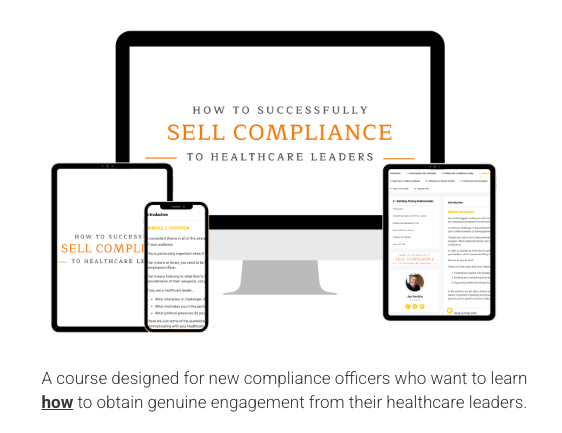
**Note: Shifting your mindset to ally is exactly the type of unwritten rule that I help coach compliance officers with inside my course. If the “people part” of the job is an area holding you back, join us inside the course today. **
______________
Listen First—Even When the Initial Answer Is Still “No”
One of the fastest ways to lose allies is to deliver technically correct guidance without first listening. To that end, I often coach newer compliance officers that “No” should be the last word out of your mouth—not the first. Also, that in order find a solution that will work for everyone, it will require a healthy dose of “active listening” skills so that leaders feel heard, understood, and respected.
So how do you do that?
There are many strategies you could google up, but for me, acknowledging the impact of my work on them tends to be my North Star.
For example, let’s assume I’m talking with a clinical department director about a new service that she is eager to offer to new patients. Further, let’s assume that she needs to make sure there are processes in place so that the patients’ medical record documentation supports billing out for the service. In the context of this example, I may hear that going through the motions of ensuring proper procedures are set up, and that the staff are trained on them, will delay patients’ access to care. So, I want to make sure I’m proactively addressing concerns like that as I’m trying to efficiently and effectively come up with a solution.
In my experience, when leaders feel validated, they tend to become an ally in the long run.
Translate Compliance Speak Into Operational Language
When it comes to communicating about compliance, the difference between being ignored and being heard often boils down to how well you communicate. And that is especially true when it comes to interacting with operational leaders.
While terms like “Stark risk,” or “OIG scrutiny” may be technically accurate, they don’t always connect emotionally or strategically with your audience, such that it positions you to build allies.
A better approach is to translate your compliance risk into their operational consequence, such as commenting about how the compliance risk will disrupt a service line, or potentially harm the organization (e.g., reputation).
For an added tip, consider incorporating a mindset that focuses in on learning their workflow before proposing a solution. You can also lead with the patient, and not the rules, as a way to help you carry out this translation.
By taking the time to be intentional about translating your world into theirs, it will do wonders for helping you build compliance allies within your organization.
(Note: If you would like some added tips for translating compliance speak into operational language, shoot me an email (janstine@bluebirdhealthlaw.com) and I’ll send them to you.)
Build Relationships—Before You Need Them
This one I really can’t stress enough. When it comes to developing alliances within an organization, it’s best to work on this during a time when there is not a compliance issue to resolve.
It’s a more genuine approach, and greatly improves your chances for developing a strong relationship with an operational leader.
So when is “right” time?
I would say if you’re new to an organization, then set up meet & greet meetings with as many leaders as you can that you’re likely to interact with. (Note: If you’re not sure yet who these folks are, then ask your supervisor to help you identify a list.) During this meeting, facilitate introductions, but make your focus about taking an active interest in the leader (e.g., who they are as a person, how their department operates, and their role in the department).
Now, if you’ve been with the organization for some time, you can still engage in a similar approach with a leader that is new-to-you (e.g., leadership turnover, or someone you’ve just never connected with yet).
Taking the time to get to know the leader before you need something from them will greatly improve the chances that when an issue does come up—your call will get answered.
Pulling it All Together
If there’s one thing I’ve learned over the course of my compliance career, it’s that your success is not defined by how well you know the rules. It’s defined by how effectively you can engage the people responsible for carrying them out. To that end, when compliance isn’t popular, soft skills aren’t optional. Instead, they become a strategic tool for navigating the corporate politics of healthcare and protecting your program’s long-term credibility.
When you’ve built strong alliances, you’ll notice a change in your environment where operational leaders call you before launching an initiative, or you start to hear things like “Let’s ask compliance how to do this the right way” vs. “Compliance says no.”
Now, in full transparency, that shift won’t occur overnight—but it will happen, and be intentional on their part, which is ultimately what you want.